
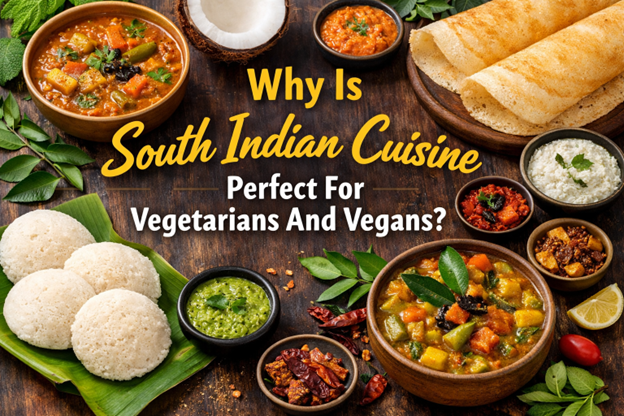
South Indian cuisine has always been an endless source of tasty and healthy vegan food options, which suit the needs of vegetarians as well as vegans. Right from the hot plates filled with idlis to the tasty sambar, the options in South Indian cuisine are endless and very healthy as well. Today, South Indian food is more than just a cognitive preference—it is an emblem of the culture’s respect and devotion to natural substances and the sustainable lifestyle associated with it. However, the question is what makes South Indian food the best suited to vegetarians and vegans. Let’s uncover the aspects of this food, which is best suited to vegan diets.
Introduction to South Indian Cuisine and Its Appeal for Plant-Based Diets
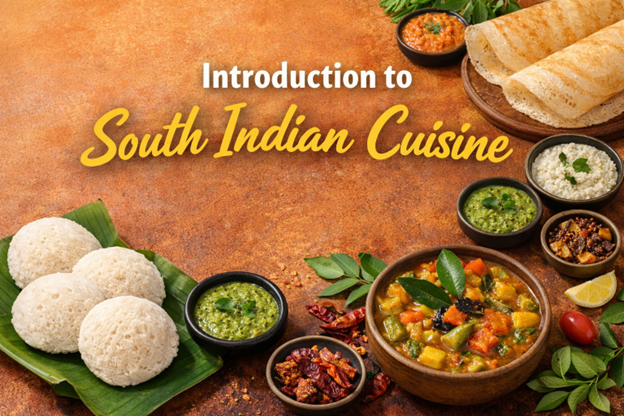
The cuisine from South India varies widely, with influences from Tamil Nadu, Kerala, Karnataka, Andhra Pradesh, and Telangana. Although there is considerable variation from place to place, there is one common aspect—the emphasis on vegetarian cuisine in all of them. Vegetarianism has a very rich history in South Indian culture. The main reasons for this were religio-social beliefs, produced from the soil, and access to ingredients from diverse food sources. The food sources here are cereals, legumes, vegetables, and herbs; consequently, it is very nutritious.
For vegans, the cuisine from South India is a cause for even more celebrations! A vegan diet is one that does not include any animal product altogether, meaning nothing but vegetables, fruits, and other plant-based materials – a wonderful thing when it comes to the cuisine found in South India with dishes like dosas, idlis, sambar, and vadas that not only taste great but meet health requirements too!
Key Features of South Indian Cuisine That Make It Ideal for Vegetarians and Vegans
In general, one of the most striking things about South Indian cuisine is how well it suits vegetarians and vegans due to the liberal use of plant-based materials in almost every preparation. Let’s look into some features that make this cuisine stand out for vegetarians and vegans.
Rich in Plant-Based Ingredients
Use of Coconut and Lentils in Almost Every Dish
Coconut: Another key ingredient in South Indian cuisine is coconut. Coconut has two major benefits: it adds flavor to food and provides healthy doses of fat. Coconut is used in different ways: grated coconut, coconut milk, coconut oil, and even coconut water. Coconut or coconut milk-based food items are used in most South Indian dishes for making curry, chutneys, and even desserts. Coconut milk-based vegetable curry is quite popular in Kerala.
Lentils are also a key part of South Indian cuisine. Whether it is Sambhar, Rasam, or other types of vegetarian dishes, lentils form a crucial part of a vegetarian/vegan diet as they are a good source of protein and amino acids. These dishes also have a number of other vegetables, which are endowed with vitamins and other essential nutrients, complemented by the protein component provided by the lentils.
Vegan-Friendly Dishes with Bold Flavors
The flavors of South Indian food derive from a magical combination of spices and herbs. The key ingredients of South Indian food include mustard seeds, cumin seeds, turmeric, coriander seeds, and fenugreek seeds. The preparation of these ingredients makes South Indian food extremely fragrant and aromatic in nature. Moreover, these ingredients possess several health-related properties as well.
For example, vatha kuzhambu is a spicy and sour tamarind-based vegetable curry commonly eaten with rice. This dish is vegan by itself and is loaded with flavors of various spices and herbs that make it absolutely delightful and an exciting journey for anyone opting for plant-based meals. Another example of such vegan-friendly South Indian dishes is the chutneys like coconut chutney and tomato chutney, which come with dosas, idlis, and vadas and are an integral part of South Indian meals.
Popular South Indian Vegan and Vegetarian Dishes

No culinary discussion about South Indian cuisine can occur without the mention of idli and dosa. These are morning meals that are prepared using a fermentation process involving rice and urad dal. The fermentation aspect not only makes it very easy to digest the food but also makes it rich in B vitamins.
Idlis and dosas are always accompanied by a range of chutneys, such as coconut chutney, and Tomato Chutney, and Sambar. These are not only vegan, but they are also very light and filling, thus being one of the best ways to have a start the new day.

Sambar, a hearty lentil soup with vegetables, is often paired with rice or dosa for a wholesome meal. Its depth of flavor comes from tamarind, spices, and vegetables, making it both tangy and savory. Similarly, rasam, a thin soup made with tomatoes, tamarind, and a range of spices, is another vegan favorite that’s often enjoyed with rice.
Such dishes are common in every South Indian household, and they can be the comforting and nutritious choice for the vegan and vegetarian diets, respectively.

The cuisine from South India is well-known for its liberal use of coconut as a basic ingredient for making curries and chutneys. Preparations such as vegetable kurma and avial, a mixed vegetable and coconut curry, are very delicious and also healthy and light on your pockets too. The coconut chutney is also very simple to make and includes chilies and mustard seeds and is very commonly used as a sauce alongside many dishes.
Nutritional Benefits of South Indian Cuisine for Vegetarians and Vegans

South Indian food is generally full of nutritional goodness. As it is prepared using healthy and raw ingredients, it offers a balanced diet to everyone, particularly to vegetarians and vegans, without depending on meat substitutes.
The major ingredients like legumes, vegetables, and food grains used in South Indian food ensure that their diet is rich in fiber and antioxidants.
The use of different spices also plays a part in the health-giving aspects of the food. Turmeric, for example, has very well-documented anti-inflammatory abilities. Coriander also has abilities that make it act as a digestion helper. These health-giving attributes of its ingredients, along with being plant-based make South Indian food the best choice for someone who wants a healthy and plant-based diet.
Conclusion - The Perfect Choice for Vegetarians and Vegans
To sum up, South Indian cuisine is a paradise for vegans and vegetarians because of the emphasis on using plant-based materials, its rich flavors, and health benefits. Be it the protein-rich sambar or dosas with rich flavors or the curries made out of coconut, South Indian cuisine boasts a wide range of dishes that can be easily fulfilled by a plant-based diet without neglecting the taste. Moreover, the strong linkage with vegetarian culture and an emphasis on natural components makes South Indian cuisine the best option for people living a vegan or vegetarian life.