
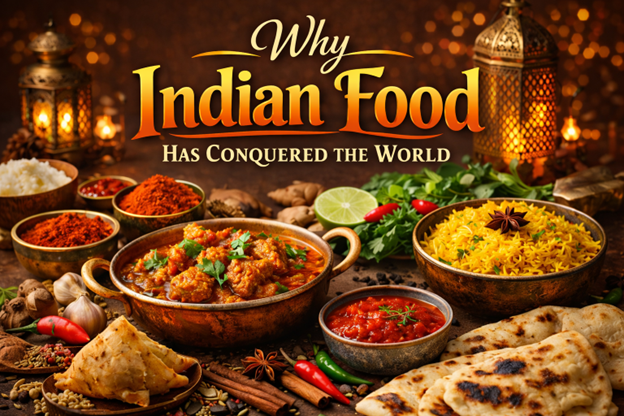
Indian cuisine has made its way into kitchens and restaurants worldwide. Whether you’re walking along the streets of New York, London, or even a tiny village, the aroma of cumin coriander, and spices invites you to partake in a culinary heritage that has captured taste senses for generations.
Indian cuisine is more than just a meal it’s an experience of taste. But what makes it so much beloved by others? The reasons are as numerous and diverse as the food itself. Let’s look at why Indian food has swept the world by storm.
A Symphony of Flavors: Not Just Heat
One of the reasons why Indian cuisine has taken the world off its feet is the complexity of flavors that it has in its repertoire of dishes. While other forms of cuisine are known for a single flavor, whether it is the piquancy of a Szechuan dish or the simplicity of a Mediterranean dish, an Indian dish is a symphony of spices, herbs, and seasoning in itself. It’s a misconception that Indian food is simply “spicy.” While heat is an important element, the beauty of Indian food lies in its balance. A perfect curry, for instance, blends sweet, sour, spicy, and savory flavors to create a complex, layered taste experience.
The heat from chilies is balanced by the sweetness of jaggery or coconut, the sourness of tamarind /yogurt, and the earthiness of cumin and turmeric. Every bite offers a new discovery, and the flavors dance on your palate in a delightful rhythm. This harmonious fusion not only tantalizes the taste buds but also engages your other senses with vibrant colors and aromatic spices that enhance the visual and olfactory experience. It’s a truly immersive sensory feast.
The Original "Medicine on a Plate"

People have known about the things Indian spices can do for a long time.
Indian spices were really good for you even before everyone started talking about superfoods.
They have been used to help people feel better for a long time. Indian spices are still used today because they have many health benefits.
Unmatched Diversity and Inclusivity

Meat Lovers’ Delights

Indian cuisine also caters to those who love meat. From the tandoori chicken of the North to the fiery, aromatic Chettinad curry of the South, there is a meat-based dish for every palate. These rich curries are a testament to the deep, flavorful cooking traditions across the country.

Comfort and Adaptability
At its heart, Indian food is comfort food. The soothing warmth of dal (lentils) or the satisfaction of a biryani (spiced rice and meat) fills the stomach and soul. These dishes are perfect for a cozy night in or when you need something comforting during a tough day.
Indian cuisine also boasts incredible adaptability. As Indian food spread across the globe, chefs embraced fusion cooking, creating dishes that merge Indian flavors with local ingredients and tastes. You can find Indo-Chinese food, Indian-style pizzas, and even Indian tacos that appeal to the more adventurous eater. This adaptability ensures that Indian food remains relevant in diverse cultural settings, offering something for everyone.
The "Pop Culture" Effect
Indian cuisine has become well-known worldwide thanks in large part to the media and popular culture. Indian cuisine has become more common in TV series, films, and internet content over time. Indian food feels familiar and welcoming when people see their favorite characters eating Indian takeout or discussing foods like curry . For example, characters in shows like The Big Bang Theory frequently eat Indian food, and scenes from international productions like Bridgerton feature Indian cuisine. Viewers are greatly influenced by these small moments. The flavors they see on screen grab viewers’ interest and make them want to try them. People are motivated to visit Indian restaurants by this curiosity.
Media and pop culture have played an important role in making Indian food popular around the world. Over the years, Indian dishes have started appearing more often in movies, TV shows, and online content. When people see their favorite characters enjoying Indian takeout or talking about dishes like curry and naan, it makes Indian food feel familiar and inviting. For example, shows like The Big Bang Theory often show characters eating Indian food, while series like Bridgerton and other international productions include Indian dishes in their scenes. These small moments leave a strong impression on viewers.
This effect has also been increased by social media. Videos of colorful curries and Indian street food are often shared by food bloggers, influencers, and travel creators. Millions of people see these posts, which show Indian cuisine as enjoyable, tasty, and simple.
Indian food is no longer considered uncommon or rare due to popular culture and the media. In many nations, it has grown to be a well-known and reliable option. Due to this exposure, Indian food has transformed from being considered “exotic” to a popular comfort food for millions of people worldwide.
Conclusion
Indian food is not just a meal; it’s a celebration of flavors, health, and culture. Its rich history of spices, its medicinal properties, and its ability to adapt to different tastes and regions have made it a global phenomenon. Whether you’re enjoying a hearty biryani or savoring the comforting flavors of dal, Indian food offers something for every palate.
From street food vendors in bustling markets to Michelin-starred restaurants, Indian cuisine continues to evolve and thrive worldwide. Its ability to blend tradition with innovation ensures that it remains a beloved cuisine, capturing the hearts (and stomachs) of millions across the globe. So, whether you’re a long-time fan or a newcomer, Indian food invites you to experience a rich tapestry of flavors, textures, and aromas that are truly unique.